cerita pendek bahasa inggris – Membaca cerita pendek bahasa Inggris sering kali jadi cara yang menyenangkan untuk belajar bahasa tanpa terasa seperti sedang belajar serius.
Lewat cerita yang singkat, Grameds bisa menikmati alur, mengenal kosakata baru, sekaligus memahami konteks penggunaan bahasa Inggris dalam kehidupan sehari-hari. Tidak heran jika cerita pendek kerap dipilih sebagai bacaan ringan, baik untuk pemula maupun pembaca yang ingin melatih kemampuan bahasa.
Nah, lewat artikel ini, kamu akan melihat contoh-contoh cerita pendek bahasa inggris, nilai moral, dan terjemahannya supaya mudah dipahami!
Daftar Isi
1. The Day the Clock Stopped
At exactly 7:13 a.m., the clock above the kitchen sink stopped ticking.
Maya noticed it only because everything else kept moving. The kettle continued to hiss softly, releasing thin clouds of steam. Outside, cars passed by in a steady rhythm, their engines humming like background noise she had long learned to ignore. Yet the clock, with its cracked plastic frame and faded numbers, froze mid-second, as if time had decided to hold its breath.
She frowned and tapped the glass twice with her finger. Nothing happened.
“Of course,” she muttered. “Just my luck.”
Maya had always believed that objects reflected people. Her phone battery drained faster when she was anxious. Her old laptop overheated whenever she pushed herself too hard. And now, on the morning of the most important presentation of her career, the clock had simply given up.
She turned away, grabbing her bag and checking her watch instead. 7:22 a.m. Still enough time, she told herself. Still enough time to catch the train, still enough time to prove—to herself more than anyone—that she was capable of more than quiet competence.
The train ride felt longer than usual. Maya sat by the window, watching the city blur into streaks of gray and muted color. Her reflection stared back at her, eyes tired but determined. She rehearsed her presentation in her head for the hundredth time, each slide perfectly memorized, each sentence carefully crafted.
She had worked on it for months.
The office building stood tall and unforgiving, all glass and steel. Maya took a deep breath before stepping inside. The lobby buzzed with activity—people walking briskly, voices overlapping, coffee cups clutched like lifelines. Time, it seemed, was moving very fast for everyone else.
In the meeting room, her colleagues gathered around the long table. Some smiled politely, others barely looked up from their laptops. At the head of the table sat Daniel, her manager, scrolling through his tablet with an expression that was impossible to read.
“Maya, you’re up,” he said without looking at her.
She connected her laptop to the projector, her hands steady despite the pounding in her chest. The first slide appeared on the screen. Title. Clean. Professional.
She began.
At first, everything went smoothly. Her voice was calm, confident. She explained the data, the strategy, the vision. As she spoke, she felt something shift inside her—not fear, but clarity. This was her work. This was her voice.
Then, halfway through the presentation, the screen went black.
A murmur rippled through the room.
Maya’s heart dropped. She glanced at her laptop. Frozen. The cursor stuck mid-movement, unresponsive.
“No,” she whispered.
She tried to restart it. Nothing.
For a brief moment, panic threatened to take over. She could feel it creeping in, tightening her chest, clouding her thoughts. This was it, the voice in her head said. This is where it all falls apart.
But then, strangely, everything slowed down.
The murmurs faded into background noise. The ticking of a wall clock—different from the one at home—became louder, more pronounced. Tick. Tick. Tick.
Maya straightened up.
“I’m sorry about the technical issue,” she said, meeting the room’s gaze. “But I’d like to continue without the slides.”
Daniel looked up now.
She took a breath and began again, this time without the safety net of bullet points and charts. She spoke from memory, from understanding. She explained not just what the data showed, but why it mattered. She told a story—about users, about problems, about possibilities.
As she spoke, she noticed something unexpected.
People were listening.
Not the polite kind of listening, where eyes drift and fingers tap keyboards, but real attention. Heads nodded. Questions formed in their expressions. The room felt alive, present.
When she finished, silence followed.
Then Daniel smiled.
“That,” he said, “was impressive.”
The meeting ended differently than Maya had imagined. There were discussions, ideas exchanged, possibilities opened. By the time she left the building, her legs felt light, as if she were walking on air.
The city looked different now. Brighter. Sharper. As if time itself had adjusted its pace to match her own.
When she arrived home that evening, the first thing she noticed was the clock above the kitchen sink.
It was ticking again.
7:13 p.m.
Maya stared at it for a long moment, then laughed softly. She didn’t try to understand it. Some things, she decided, didn’t need explanations.
She made herself a cup of tea and sat by the window, watching the sky fade into deep shades of blue. Time moved forward, as it always did. But for the first time in a long while, she felt like she was moving with it—not chasing, not lagging behind.
Just in sync.
Terjemahan
Tepat pukul 7:13 pagi, jam di atas wastafel dapur berhenti berdetak.
Maya menyadarinya hanya karena semua hal lain tetap bergerak. Ketel masih mendesis pelan, melepaskan uap tipis. Di luar, mobil-mobil melintas dengan irama stabil, suara mesinnya menjadi dengung latar yang sudah lama ia abaikan. Namun jam itu, dengan bingkai plastik retak dan angka yang memudar, membeku di tengah detik—seolah waktu menahan napas.
Ia mengernyit dan mengetuk kacanya dua kali. Tidak terjadi apa-apa.
“Tentu saja,” gumamnya. “Pas sekali waktunya.”
Maya selalu percaya bahwa benda mencerminkan pemiliknya. Baterai ponselnya lebih cepat habis saat ia cemas. Laptop lamanya mudah panas saat ia memaksakan diri bekerja terlalu keras. Dan sekarang, di pagi hari presentasi terpenting dalam kariernya, jam itu seperti menyerah.
Ia berbalik, meraih tas, lalu melihat jam tangannya. 7:22 pagi. Masih cukup waktu, katanya pada diri sendiri. Masih cukup untuk mengejar kereta, masih cukup untuk membuktikan—terutama pada dirinya sendiri—bahwa ia lebih dari sekadar “cukup baik”.
Perjalanan kereta terasa lebih lama dari biasanya. Maya duduk di dekat jendela, melihat kota berubah menjadi garis abu-abu yang kabur. Pantulan wajahnya tampak lelah tapi tegas. Ia mengulang presentasinya di kepala untuk keseratus kali. Setiap slide hafal, setiap kalimat tersusun rapi. Ia telah mengerjakannya selama berbulan-bulan.
Gedung kantor berdiri tinggi dan dingin, terbuat dari kaca dan baja. Maya menarik napas dalam sebelum masuk. Lobi ramai—orang berjalan cepat, suara saling bertumpuk, cangkir kopi digenggam seperti penyelamat. Waktu terasa bergerak sangat cepat bagi semua orang.
Di ruang rapat, rekan-rekannya sudah duduk. Sebagian tersenyum sopan, sebagian lagi menatap laptop. Di ujung meja, Daniel, manajernya, menggulir layar tablet tanpa ekspresi.
“Maya, silakan,” katanya singkat.
Ia menyambungkan laptop ke proyektor. Tangannya tenang meski jantungnya berdegup kencang. Slide pertama muncul. Judul. Bersih. Profesional.
Ia mulai berbicara.
Awalnya semuanya berjalan lancar. Suaranya tenang dan percaya diri. Ia menjelaskan data, strategi, dan visi. Ia merasakan sesuatu berubah dalam dirinya—bukan takut, tetapi jernih. Ini karyanya. Ini suaranya.
Lalu di tengah presentasi, layar tiba-tiba gelap.
Suara gumaman muncul di ruangan.
Jantung Maya serasa jatuh. Laptopnya membeku. Kursor berhenti.
“Tidak,” bisiknya.
Ia mencoba menyalakan ulang. Gagal.
Panik sempat naik ke permukaan. Dada terasa sesak. Pikiran berkabut. Ini akhir semuanya, kata suara di kepalanya.
Namun tiba-tiba, semuanya terasa melambat.
Gumaman memudar. Detak jam dinding terdengar jelas. Tik. Tik. Tik.
Maya menegakkan tubuh.
“Maaf ada kendala teknis,” katanya, menatap semua orang. “Saya akan lanjut tanpa slide.”
Daniel kini menatapnya.
Ia menarik napas dan mulai lagi—tanpa peluru poin, tanpa grafik. Ia berbicara dari pemahaman. Dari ingatan. Ia menjelaskan bukan hanya data, tapi maknanya. Ia bercerita tentang pengguna, masalah, dan kemungkinan.
Dan sesuatu yang tak terduga terjadi.
Orang-orang benar-benar mendengarkan.
Bukan mendengar sambil setengah perhatian—tetapi fokus penuh. Kepala mengangguk. Ekspresi bertanya muncul. Ruangan terasa hidup.
Saat ia selesai, ruangan hening.
Lalu Daniel tersenyum.
“Itu mengesankan,” katanya.
Ketika pulang, langkah Maya terasa ringan. Kota tampak lebih cerah. Sesampainya di rumah, jam dapur kembali berdetak.
7:13 malam.
Ia tertawa pelan. Tidak semua hal perlu penjelasan. Untuk pertama kalinya setelah sekian lama, ia merasa berjalan seirama dengan waktu.
Nilai Moral
Cerpen ini bertemakan tentang keberanian menghadapi tekanan dan menemukan ritme diri sendiri di tengah tuntutan hidup.
Selain itu, cerita ini juga mengangkat tema pendukung seperti ketegangan dunia kerja, makna waktu, serta proses pendewasaan emosional.
2. The Blue Crayon
On a quiet Saturday morning, Leo opened his pencil case and frowned.
The blue crayon was missing.
He poured the crayons onto his desk—red, yellow, green, brown, even the broken purple one—but no blue. Blue was his favorite. He used it to draw the sky, the ocean, and the superhero cape in almost every picture.
Without blue, his drawings felt unfinished.
“Mom,” Leo called from his room, “have you seen my blue crayon?”
His mother looked up from the kitchen. “Did you check under your desk?”
“Yes,” Leo replied. “Twice.”
He checked again anyway. Still nothing.
Leo sat on his bed, holding the other crayons in his hand. He felt a small lump in his throat. It was silly to be sad over a crayon, he knew that. But the blue crayon had been with him for a long time. His teacher had once put his drawing on the classroom wall because of the beautiful blue sky he had colored.
He decided to look outside.
Leo walked into the backyard, where his little sister Mia was playing with her toy animals. She looked up and smiled.
“Do you want to play?” she asked.
“Maybe later,” Leo said. “I’m looking for my blue crayon.”
Mia tilted her head. “The long one? Like the sky?”
Leo nodded.
“I saw it,” she said proudly. “Yesterday.”
“Where?” Leo asked, his eyes lighting up.
“In my box,” Mia said. “I borrowed it.”
Leo felt a mix of relief and annoyance. “Mia, you should ask before borrowing.”
Mia’s smile disappeared. “I’m sorry,” she said softly. “I wanted to draw the sea for my fish.”
She opened her toy box and handed him the blue crayon. It had a small bite mark on the side.
Leo sighed. “You bit it.”
“I was pretending it was a cookie,” Mia said.
For a moment, Leo wanted to be angry. The crayon was his, and now it was broken. But then he looked at Mia’s drawing on the ground. It showed a bright blue sea with smiling fish and a yellow sun.
“It’s nice,” he said.
Mia smiled again.
Back in his room, Leo sharpened the blue crayon carefully. It was shorter now, but it still worked. He took out a clean piece of paper and started drawing.
This time, he didn’t draw a superhero.
He drew the backyard. The tree. The sun. And the blue sky above it all. Then he added a small figure holding a crayon, and another one standing beside her.
When he finished, he felt happy.
Later that day, Leo taped the drawing to his wall. The blue crayon rested beside it, shorter but still useful.
He learned something important that morning.
Sometimes, things change. They might get smaller or look different. But they can still be special—especially when they are shared.
Terjemahan
Pada Sabtu pagi yang tenang, Leo membuka kotak pensilnya dan mengernyit.
Krayon biru hilang.
Ia menumpahkan semua krayon ke meja—merah, kuning, hijau, cokelat, bahkan ungu yang patah—tetapi tidak ada biru. Biru adalah favoritnya. Untuk langit, laut, dan jubah pahlawan super.
Tanpa biru, gambarnya terasa tidak selesai.
“Bu, lihat krayon biruku?” teriaknya.
“Sudah cek bawah meja?”
“Sudah. Dua kali.”
Ia duduk di kasur, sedih. Lalu pergi ke halaman. Adiknya, Mia, sedang bermain.
“Aku pinjam kemarin,” kata Mia.
Leo lega sekaligus kesal. “Harusnya bilang dulu.”
“Maaf. Aku mau gambar laut buat ikanku.”
Mia menyerahkan krayon biru. Ada bekas gigitan.
“Kamu gigit?”
“Kukira kue.”
Leo ingin marah—tapi melihat gambar Mia: laut biru cerah dan ikan tersenyum.
“Bagus,” katanya.
Ia meraut krayon itu. Lebih pendek, tapi masih bisa dipakai. Ia menggambar halaman, pohon, matahari, dan langit biru. Dua anak berdiri berdampingan.
Ia tersenyum.
Hari itu Leo belajar: sesuatu boleh berubah bentuk, tapi tetap berharga—terutama saat dibagi.
Nilai Moral
Tema utama cerpen ini adalah berbagi, empati, dan menerima perubahan. Selain itu, cerita ini juga menekankan nilai persaudaraan, pengendalian emosi, serta bagaimana hal kecil dapat mengajarkan pelajaran besar.
3. Things We Never Said
The last message Lena received from her father was unfinished.
Don’t forget to—
That was it. No punctuation. No goodbye. Just a sentence that stopped mid-thought, like he had been interrupted by something more important than words.
She found it weeks later, buried beneath work notifications and unanswered group chats. By then, it was too late to ask what he meant.
Lena sat on the edge of her bed, phone trembling slightly in her hand. The room felt too quiet, as if even the walls were listening. She read the message again, hoping the meaning would reveal itself if she stared long enough.
Don’t forget to what?
She had spent most of her life forgetting things when it came to her father. Forgetting to call back. Forgetting birthdays until reminders popped up on her screen. Forgetting that silence, too, could hurt.
Growing up, her father had always been there in practical ways. He fixed broken shelves, paid school fees on time, drove her to early morning classes without complaint. But he was not a man of many words. Affection, when it came, was subtle—an extra apple sliced and left on the table, a quiet knock on her door to ask if she had eaten.
Lena learned early not to ask for more.
When she moved to another city for work, their conversations became shorter. Functional. Safe.
“How are you?”
“Fine.”
“Work?”
“Busy.”
She told herself this was normal. That love didn’t need constant proof. That some relationships simply existed in the background, steady and unchanging.
Until one day, the background disappeared.
The funeral passed in a blur of faces and formal condolences. People told her he was proud of her. That he talked about her often. Lena nodded, thanked them, stored their words carefully in a place where grief couldn’t reach just yet.
It wasn’t until she returned to his house that the weight settled in.
The house smelled the same—faintly of coffee and old books. Dust particles floated lazily in the afternoon light. Everything was exactly where it had always been, except for him.
She wandered through the rooms, touching familiar objects as if they might still be warm. On his desk, she found a small notebook, its cover worn from years of use. Inside were lists. Grocery items. Phone numbers. Reminders.
And then, halfway through, she found her name.
Lena
– Call on Sunday
– Ask about work
– Don’t forget to tell her I’m proud
Her breath caught.
She sat down slowly, the notebook resting in her lap like something fragile. Page after page revealed small intentions he had never spoken aloud. Notes about her favorite food. The name of the company she worked for, misspelled but earnest. A reminder to ask if she was sleeping well.
All the things he never said out loud were here, written carefully in ink.
Tears blurred the words, but she didn’t wipe them away. She let them fall, freely, unapologetically. For the first time since his death, she allowed herself to feel the full weight of what had been lost—not just a parent, but a conversation that would never be finished.
That night, Lena opened her phone and typed a message she knew would never be read.
Dad, I didn’t forget. I just didn’t know you were waiting.
She hesitated, then continued.
I wish I had asked more. I wish I had listened harder. I wish I had said I was proud of you too.
She didn’t send it. Instead, she saved it in her notes, a quiet confession meant only for herself.
In the weeks that followed, Lena changed in small but noticeable ways. She called people more often. She said things when they mattered, even when her voice shook. She stopped assuming there would always be another chance.
One evening, while cleaning out the last of her father’s belongings, she found an old voice recorder tucked away in a drawer. Curious, she pressed play.
Static crackled, followed by his voice—soft, uncertain.
“If you’re listening to this,” he said, clearing his throat, “I probably didn’t manage to say everything I wanted to.”
Lena pressed a hand to her mouth.
“I just wanted you to know,” he continued, “that I was never good with words. But I felt things deeply. Especially when it came to you.”
The recording ended abruptly.
Lena smiled through her tears.
Some things, she realized, didn’t need perfect timing. They didn’t need grand speeches or flawless delivery. Sometimes, meaning found its way through anyway—through notebooks, unfinished messages, and memories that refused to fade.
That night, she finally understood the last message.
Don’t forget to—
feel.
speak.
love out loud.
And this time, she wouldn’t.
Terjemahan
Jangan lupa untuk—
Hanya itu.
Ia menemukannya berminggu-minggu kemudian. Terlambat untuk bertanya. Ia sadar selama ini ia sering lupa membalas telepon, lupa ulang tahun, lupa bahwa diam juga bisa melukai.
Ayahnya tidak banyak bicara, tapi selalu hadir: memperbaiki rak, membayar sekolah, mengantar pagi. Kasih sayangnya halus—apel yang sudah dipotong, ketukan pelan di pintu.
Setelah ayahnya meninggal, Lena menemukan buku catatan.
Namanya tertulis:
- Telepon hari Minggu
- Tanya soal kerja
- Jangan lupa bilang aku bangga
Napasnya tercekat.
Ia menangis. Semua hal yang tak pernah diucapkan—ternyata ditulis.
Ia menulis pesan yang tak pernah dikirim:
“Ayah, aku juga bangga.”
Sejak itu Lena berubah. Ia lebih sering menelepon orang. Mengatakan hal penting saat masih ada waktu.
Suatu malam ia menemukan perekam suara lama.
“Aku tidak pandai berkata-kata,” suara ayahnya berkata. “Tapi aku sangat menyayangimu.”
Rekaman berhenti.
Lena tersenyum di antara air mata.
Kini ia mengerti pesan terakhir itu:
Jangan lupa untuk—
merasakan.
berbicara.
mencintai dengan suara keras.
Dan kali ini, ia tidak akan lupa.
Nilai Moral
Tema utama dalam cerpen ini adalah penyesalan, komunikasi yang tertunda, dan cinta yang tidak selalu diungkapkan dengan kata-kata.
Cerita ini juga mengajarkanmu untuk merenungkan makna kehadiran, kata-kata, dan hubungan antarmanusia sehingga kamu perlu menyampaikan perasaanmu selagi masih ada kesempatan.
Belajar Bahasa Lewat Cerita: Kecil Namun Bermakna!
Membaca cerita pendek bahasa Inggris bukan hanya soal memahami kata demi kata, tetapi juga menikmati alur, emosi, dan pesan yang ingin disampaikan penulis.
Melalui cerita yang singkat namun bermakna, kamu bisa belajar bahasa Inggris dengan cara yang lebih menyenangkan.
Semakin sering membaca, semakin berkembang pula kemampuan memahami teks secara alami.
Maka dari itu, yuk jadikan kegiatan membaca cerita pendek bahasa Inggris sebagai kebiasaan yang seru sekaligus bermanfaat dalam hidupmu!
Rekomendasi Buku tentang Bahasa Inggris
1. Let’s Talk and Practice: Bahasa Inggris untuk Pemula
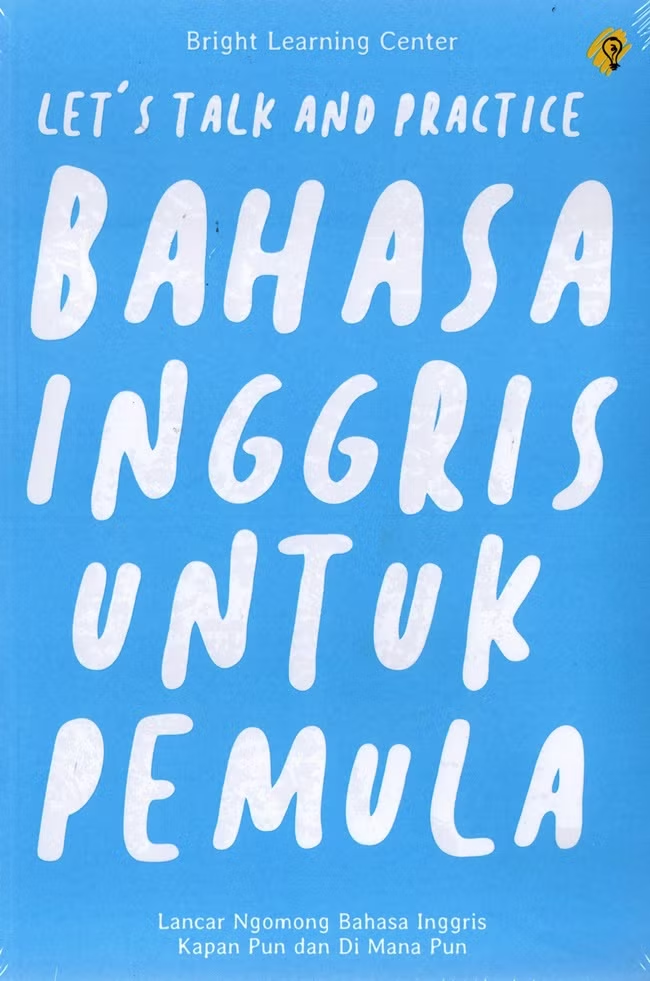

Kemampuan berbicara bahasa Inggris menjadi sangat penting, Bagi banyak pembelajar, berbicara bahasa Inggris adalah hal yang tidak mudah Kesulitan semacam ini disebabkan beberapa hal seperti kurangnya kosakata serta kurangnya latihan. Oleh karena itu, buku ini hadir untuk membantu pembelajar yang ingin bisa berbicara bahasa Inggris. Buku ini hadir dengan deretan kosakata yang akan memperkaya perbendaharaan kata, contoh percakapan yang memberikan pola bagaimana kata-kata tersebut digunakan dalam percakapan sehari-hari, dan contoh latihan yang membantu pembelajar mengingat pembelajaran sebelumnya.
2. Master Percakapan Bahasa Inggris
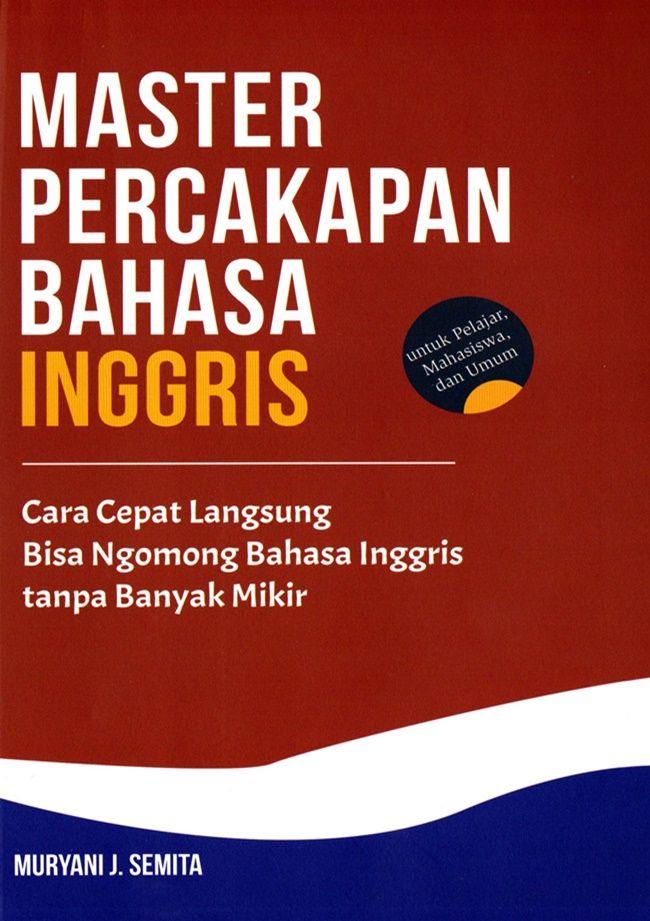
Menguasai bahasa Inggris secara mudah dan praktis dapat diawali dengan belajar percakapan bahasa Inggris atau English conversation. Buku ini hadir untuk membantu kamu belajar menguasai ekspresi percakapan bahasa Inggris, konteks perbincangan yang kerap muncul, ungkapan dan kalimat yang sering diucapkan sehari-hari.
3. Autodidak Cas Cis Cus Jago Bahasa Inggris

Buku ini dibuat berdasarkan format materi pelajaran per hari, dari hari pertama sampai dengan hari ke sembilan belas, dengan disertai latihan-latihan soal dan tambahan tabel perubahan kata kerja yang tidak beraturan (irregular verbs) yang sering digunakan dalam kalimat dan percakapan sehari-hari. Disiplinkan diri anda untuk mempelajari buku ini setiap hari maka andapun akan jago bahasa Inggris dalam waktu singkat.
Tenses
- Adverb of Frequency
- Apostrophe
- Asking and Giving Opinion
- Causative Verb
- Cerita Pendek Bahasa Inggris
- Complex Sentence
- Contoh Pidato Bahasa Inggris Singkat
- Conditional Sentence Type 2
- Contoh Storytelling Singkat Bahasa Inggris
- Contoh Kalimat Suggestion
- Degrees of Comparison
- Descriptive Text
- Imperative Sentence
- Irregular Verb
- Language Features of Descriptive Text
- Noun Clause
- Panduan Belajar Bahasa Inggris Pemula
- Pembukaan Presentasi Kelompok Bahasa Inggris
- Perbandingan IELTS dan TOEFL
- Pembukaan Pidato Bahasa Inggris
- Preposition of Time
- Rambu Lalu Lintas Dalam Bahasa Inggris
- Slang Words
- Subordinating Conjunction
- Temporal Conjunction
- Whom